


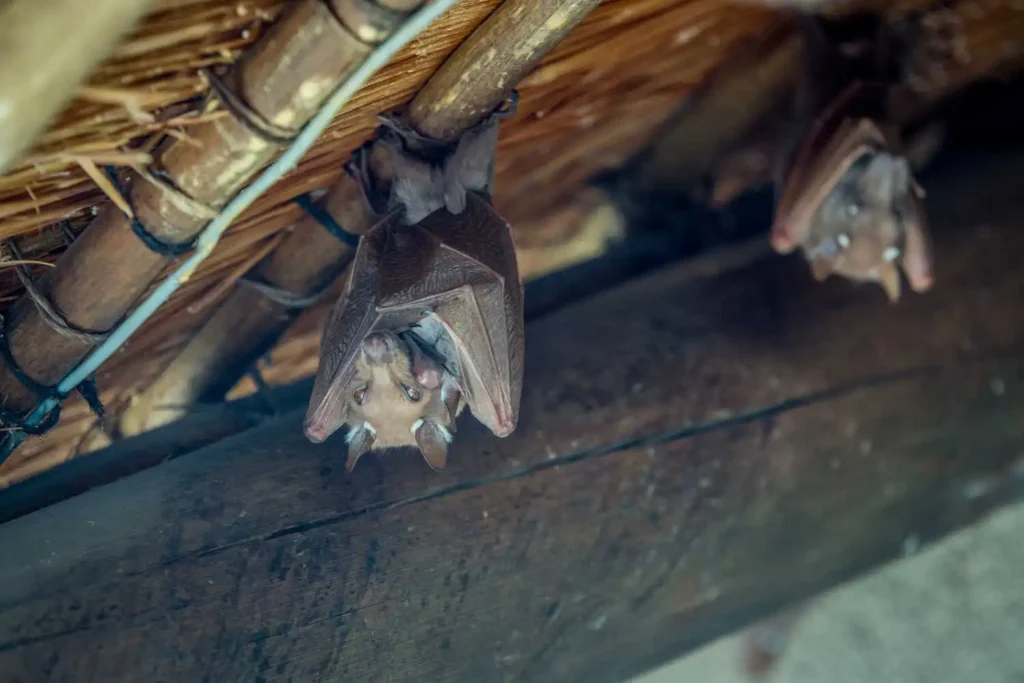
It is a cold January evening, the house is quiet, and suddenly something is flying laps around your living room. Finding a bat in the house in winter catches almost everyone off guard, because most of us assume bats are long gone by the first frost. The good news: this happens in Westchester County homes, and there is a clear, safe order of steps to follow. Below, we cover why bats wake up in the cold months, what to do in the first few minutes, how bats get inside in the first place and when it makes sense to call a professional.
Why Is There a Bat in My House in Winter?
The short answer: the bat was probably already living in your house. Do bats hibernate in the winter? Many do, and not all of them head for caves. According to Penn State Extension, a bat found indoors in winter is most likely a big brown bat, a species that often hibernates in attics, crawl spaces and wall voids.
Hibernation is a deep, energy-saving sleep, but it is not nonstop. Bats wake up now and then to move around, especially when their roost gets too warm or too cold. A warm spell or a sudden temperature swing can be enough to stir one. A bat that wakes up inside a wall or crawl space can wander the wrong way and end up in your kitchen instead of outside.
That is why one winter bat is worth paying attention to. It most likely did not fly in through an open door in January. It came from a roost somewhere in the structure, and there may be others sleeping nearby.
Where Do Bats Go in the Winter?
Bats have two main ways of getting through the cold: they migrate or they hibernate. The New York State Department of Health notes that many house bats leave their summer roosts in the fall and fly to caves and mines to hibernate, while some tree bats migrate south.
Big brown bats are the exception that matters most for homeowners. They are more likely to stay put and hibernate inside buildings. For a home in Chappaqua, that means the attic, a wall void or a chimney can hold sleeping bats all winter without anyone noticing. Sleeping bats are quiet, so the first sign is often a single bat that wakes up and takes a wrong turn into the living space.
Found a Bat Inside? What to Do Right Now
First, take a breath. Most bats are healthy, and bats rarely attack people. Every bat in house situation starts with the same two goals: keep everyone safe and figure out whether anyone may have touched the bat.
- Keep people and pets out of the room. Close interior doors so the bat stays in one space.
- Do not touch the bat with bare hands, even if it looks hurt or stuck.
- Think about possible contact. Was the bat found in a room where someone was sleeping? Was it near a young child who was alone, a person who may not be able to say what happened, or a pet? Did it touch anyone?
If the answer to any of those is yes, or you are not sure, do not release the bat and do not throw it away. Call your local health department first. The New York State Department of Health explains why: bats have very small teeth, and a bite can leave marks that are hard to see. People who were asleep, young children and pets may not realize contact happened. The health department can tell you whether the bat should be tested for rabies, which is the only way to know for sure.
If you are certain there was no contact, move on to the next step.
How to Get a Bat Out of Your House Safely
Only when you are sure no one had contact, the simplest approach is to give the bat a way out:
- Close the interior doors so the bat is confined to one room.
- Open a window or an exterior door in that room.
- Turn off the room lights and keep things quiet.
- Watch from a safe distance and give it time.
If you need to handle anything near the bat, wear thick gloves. Never use bare hands.
Winter adds a wrinkle. When temperatures are well below freezing, sending a bat outside is not always the right move, and Penn State Extension points out that the weather changes what should happen next. Rather than guess, call a professional or your local health department for advice. A quick call is better than a well-meant mistake for you or the bat.
How Do Bats Get in the House?
Bats use openings that are already there, and they do not need much room. Common entry points include:
- Loose flashing
- Uncapped chimneys
- Damaged soffits
- Ridge vents
- Small construction gaps
Some roof gaps can be as small as 3/8 inch and still let a bat through. Older rooflines, like many in Scarsdale, can develop these small openings over time as flashing loosens and trim weathers. If you live there, our page on bat removal in Scarsdale covers local service.
Finding and closing these gaps the right way is the heart of humane bat exclusion: identify the active openings, address the secondary gaps, let the bats leave on their own and then seal the final opening so they cannot come back.
One Bat or a Colony? Signs to Check
A single bat in the living room does not always mean a large colony, but it is worth a look. Signs that bats may be roosting in the house include:
- Scratching or squeaking in the walls or attic near dusk
- Guano (droppings) collecting below openings
- Dark rub marks around gaps where bats squeeze in and out
- Unusual odors
- Bats leaving the same gap in the roofline
Look from a distance, and use a flashlight rather than climbing into tight spaces. Do not sweep, vacuum or otherwise disturb guano, since that can put dust into the air. Leave that part to a professional.
When to Call a Bat Professional in Westchester
If a bat is loose in your living space at night and you are not sure what to do, call QualityPro at 914-712-6333. Our 24/7 emergency line is there for exactly this kind of bat in house call. Emergency service handles the bat in front of you, and a follow-up inspection looks for how it got in.
That inspection checks the active openings, the roost conditions and the right timing before any exclusion work begins. Exclusion is humane and properly timed: one-way devices let bats leave on their own without getting back in, then the last openings are sealed and damaged areas are repaired.
QualityPro is a family owned and operated company based in Hawthorne, serving homeowners since 2004. We are a New York State licensed pest control business (License No. 13666), and owner Jim Horton serves as Vice President of the New York State Wildlife Management Association and Eastern Director of the National Wildlife Control Operators Association. Learn more about our bat removal in Westchester County, or request an inspection and we will help you figure out the next step.
Frequently Asked Questions
Is it safe to sleep in a house with bats?
It depends on where the bats are. According to the NYS Department of Health, a bat found in a room where someone was sleeping should be treated as possible contact, so do not release it. Call your local health department about testing. Bats roosting in the attic are a different situation, but the home should still be inspected.
How long can a bat live inside my house?
Not long in the living space. Penn State Extension notes that bats dehydrate quickly in the warm temperatures inside a house, so a bat that has been loose for a while may weaken. Rather than waiting it out, call a professional, or call your local health department if anyone may have had contact.
Can bats be removed in winter?
An inspection decides the plan and the timing. A technician confirms where bats are active, checks the roost conditions and chooses the timing and one-way devices that let bats leave without getting back in. For an urgent bat in house problem, our 24/7 emergency service can handle that bat right away.
How common is it to find a bat in your house?
Common enough that the NYS Department of Health has specific guidance for it. The department notes that big brown and little brown bats, often called house bats, are the ones people most often come into contact with, and they roost in attics and other sheltered spots. One bat inside is a good reason to have the attic and walls checked.